
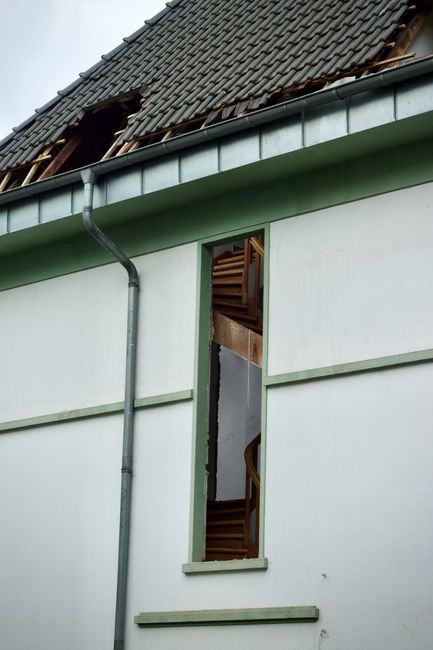
Roof problems rarely become expensive all at once. A missing shingle, lifted flashing edge, blocked gutter, or small ceiling stain may begin as a limited repair, but continued exposure to water, wind, ice, and changing temperatures can spread the damage into the roof deck, insulation, framing, walls, and electrical systems.
For households in Palmyra, NY, seasonal weather makes delay especially risky. Snow, wind-driven rain, freeze-thaw cycles, and ice buildup can turn a minor weakness into a larger building problem.
How much can ignoring a roof problem cost?
The cost depends on what is damaged and how long moisture remains active. A small exterior repair may become much more expensive if water reaches hidden materials.
Possible cost layers include:
- Roof covering repairs
- Replacement of water-damaged roof decking
- Wet or compressed insulation
- Damaged attic framing
- Stained or weakened ceilings and walls
- Mold cleanup
- Electrical repairs
- Interior flooring or furnishing damage
- Emergency work after a storm or heavy snowfall
The roof itself is only one part of the potential expense. Water follows framing, insulation, wiring, and wall cavities, so the visible drip may not be located directly below the original entry point.
A leak that appears only during heavy rain may still be active between storms. Roofing materials can dry on the surface while moisture remains trapped underneath.
Why does a small roof leak spread?
Water can travel farther than many homeowners expect. It may enter around a damaged shingle, chimney, vent, skylight, valley, or flashing joint and then move along the roof deck before reaching the attic floor or ceiling.
Repeated wetting causes materials to lose strength. Roof decking may swell or soften, fasteners can corrode, and insulation can become less effective. Wood framing may remain damp long enough to support decay.
The longer a leak continues, the harder it becomes to identify the original entry point. Several small openings may also develop as roofing materials age, making the problem appear larger or more confusing than it was at first.
What damage can water cause inside a house?
Interior damage is often more expensive than the original roof repair because it involves finished surfaces and hidden assemblies.
Common signs include:
- Brown or yellow ceiling stains
- Peeling paint or bubbling drywall
- Damp odors
- Sagging ceiling sections
- Wet attic insulation
- Darkened roof decking
- Rust around fasteners or metal components
- Warped trim
- Damp walls near exterior corners
A stain does not always mean the leak is currently active, but it should not be dismissed. The water may have entered during an earlier storm, or the problem may occur only under a particular wind direction or rainfall intensity.
Moisture near light fixtures, outlets, or wiring deserves particular caution. Turning off power to the affected circuit may be appropriate if it can be done safely. A sagging ceiling should not be stood beneath, especially if it is visibly swollen or holding water.
How do winter conditions increase roof damage?
Cold-weather conditions can expose weaknesses that remain unnoticed during warmer months. Snow and ice add weight, while freeze-thaw cycles expand small cracks and openings.
Ice dams form when melting snow refreezes near the colder roof edge. The resulting ice can interfere with drainage and allow meltwater to move beneath roof coverings. Not every ice formation causes a leak, but recurring interior staining near eaves or exterior walls may indicate a drainage or roof-heat problem.
Older homes may also have roof shapes, attic ventilation patterns, additions, or insulation conditions that create uneven melting. Valleys, porch connections, dormers, and areas where two roof sections meet can be especially vulnerable.
Heavy snow should not be removed by climbing onto the roof without proper equipment and experience. Roof surfaces are slippery, and uneven removal can create fall hazards or place stress on the structure.
Can neglected gutters damage the roof?
Yes. Gutters and downspouts help direct water away from roof edges, walls, and foundations. When they are clogged, displaced, or filled with ice, water may back up against fascia boards and roof edges.
Overflowing water can contribute to:
- Rot at the roof edge
- Damaged soffits and fascia
- Wet exterior walls
- Basement or foundation moisture
- Erosion near the building
- Ice formation along the eaves
Gutters are not a substitute for a sound roof, but poor drainage can accelerate damage to an already aging roof. After leaves fall and before winter weather becomes severe, checking for blockages and loose sections can reveal problems early.
Does a roof problem always mean the entire roof needs replacement?
No. Some problems are limited to a small area, such as a damaged flashing section, a few missing shingles, or a localized puncture. Other conditions may involve widespread loss of shingle adhesion, repeated leaks, deteriorated decking, or aging materials across much of the roof.
The key question is whether the problem is isolated or part of a larger pattern.
Useful observations include:
- Whether leaks occur in more than one location
- Whether shingles are curling, cracking, or losing surface granules
- Whether the roof deck feels soft in the attic
- Whether repairs have been repeated in the same area
- Whether flashing is loose, corroded, or separated
- Whether the roof has experienced storm, ice, or branch damage
A roof can look acceptable from the ground while having concealed damage beneath the surface. Conversely, a few visibly worn shingles do not automatically prove that the entire assembly has failed.
What should residents check after a storm?
After strong wind, heavy rain, or snow, a ground-level inspection can identify warning signs without creating a fall risk.
Look for:
- Shingles or metal pieces in the yard
- New ceiling stains
- Exposed underlayment or roof decking
- Bent or displaced flashing
- Gutter sections that have pulled away
- Fallen branches or impact marks
- Water in the attic or upper-floor rooms
- Daylight visible through the roof deck
Do not climb onto a wet, icy, or damaged roof. If structural movement, a large ceiling bulge, exposed wiring, or widespread water entry is present, the situation may require immediate safety measures before any ordinary repair decision is made.
Why is early attention usually less expensive?
Early attention limits the number of building materials exposed to moisture. A repair performed while damage is confined to the roof covering may avoid replacement of decking, insulation, drywall, paint, flooring, and personal belongings.
It also provides more choices. A problem discovered before a major storm or winter event can often be evaluated under safer conditions than one discovered during active leaking, high winds, or freezing temperatures.
The practical lesson is not that every roof issue is an emergency. It is that visible evidence of water, movement, or missing materials should be documented and assessed before it has time to spread. In a climate with snow, ice, rain, and repeated temperature changes, postponing a small roof decision can shift the expense from a limited repair to a broader building restoration.
